
NOTE
Fibonacci Sequence
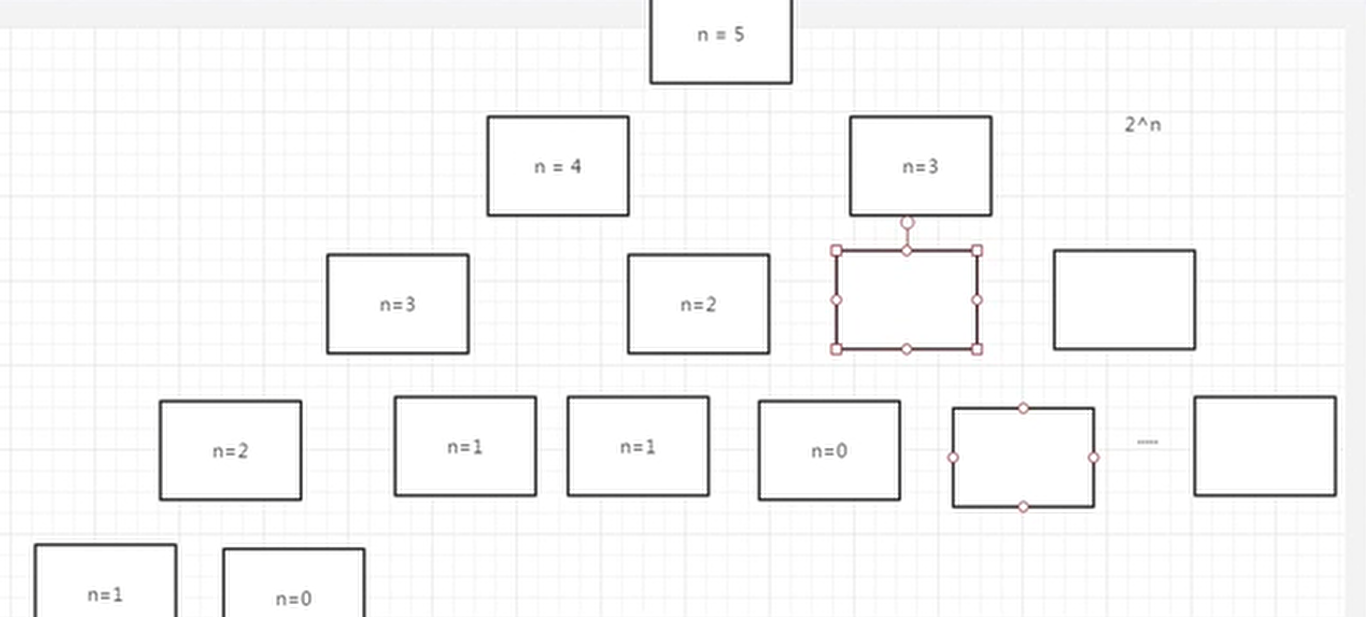
Record three implementations of the Fibonacci sequence: recursion, memoization, and dynamic programming.
This is a historical learning note and may contain outdated or incomplete understanding.
1. Problem Description
Given an integer n, output the nth item of the Fibonacci sequence (starting from 0, where the 0th item is 0 and the 1st item is 1).
2. Approach
- Recursion
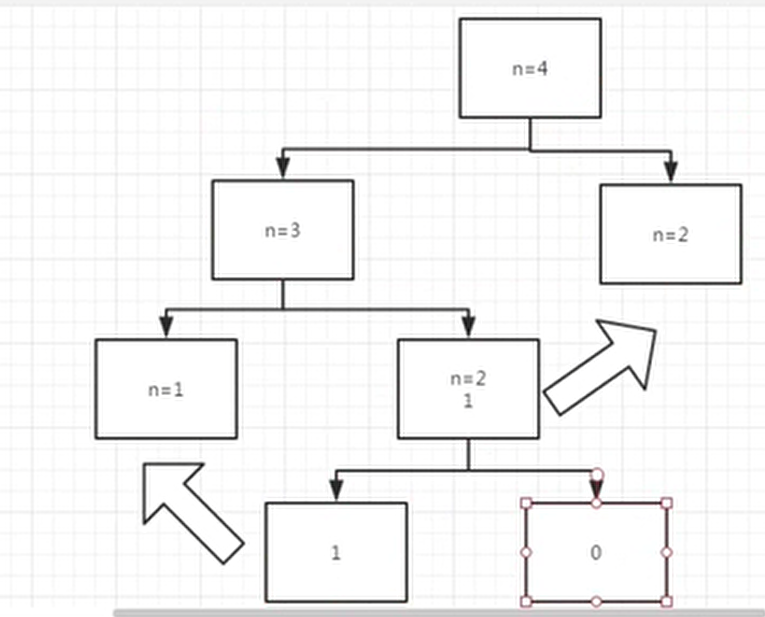
- Memoization to eliminate repeated calculations
- Dynamic programming
3. Implementation
3.1. Recursion
// Calculate top-down: recursion
// Time complexity: O(2^n)
// Space complexity: recursion stack space
func Fibonacci(n int) int {
	if n <= 1 {
		return n
	}
	return Fibonacci(n-1) + Fibonacci(n-2)
}
3.2. Memoization
// To avoid repeated calculations, use a cache
// Time complexity: O(n), with no repeated calculations
// Space complexity: O(n) plus recursion stack space
var cache = make(map[int]int, 0)

func Fibonacci2(n int) int {
	val, ok := cache[n]
	if ok {
		return val
	}

	if n <= 1 {
		return n
	}
	res := Fibonacci2(n-1) + Fibonacci2(n-2)
	cache[n] = res
	return res
}
3.3. Dynamic Programming
// Calculate bottom-up using dynamic programming
// Time complexity: O(n)
// Space complexity: O(1)
func Fibonacci3(n int) int {
	if n <= 1 {
		return n
	}

	a := 0
	b := 1
	res := a + b
	for i := 2; i < n; i++ {
		a = b
		b = res
		res = a + b
	}

	return res
}
Discussion
Sign in with GitHub to comment. Discussions are stored as GitHub Issues.View on GitHub