
NOTE
5.4 IP Protocol
Historical notes on the IP protocol, packet format, and IP fragmentation.
This is a historical learning note and may contain outdated or incomplete understanding.
1. What Is the IP Protocol?
A network-layer protocol.
2. Characteristics of IP
Provides hosts on a network with a connectionless, unreliable, best-effort packet-delivery service.
3. Why Is IP Needed?
To solve the problem of interconnecting heterogeneous networks.
4. IP Datagram Format
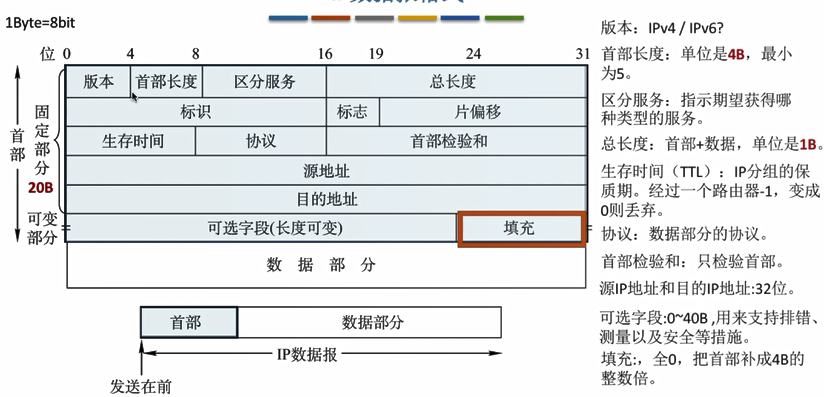
5. IP Datagram Fragmentation
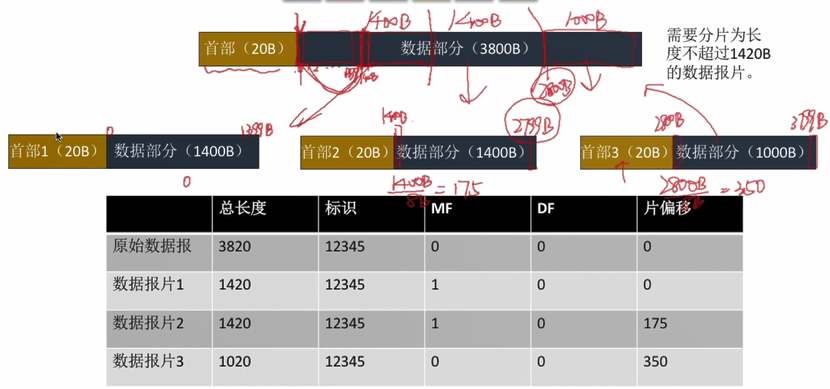
The maximum size of an IP packet is 2^16-1, or 65535 bytes. However, the MTU (the upper limit of data that the data-link layer can encapsulate) is 1500 bytes, so large IP data needs to be fragmented.
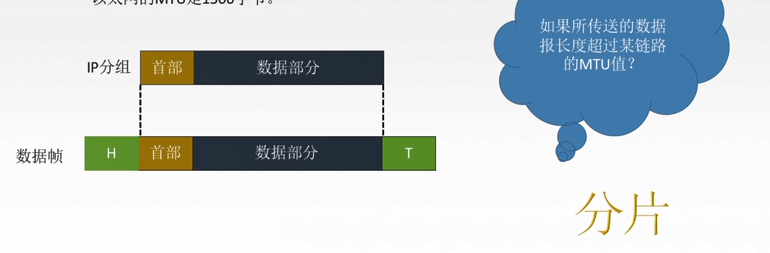
An IP datagram has three relevant fields:
- 16-bit identification field: fragments of the same packet use the same identifier.
- 3-bit flags field: only 2 bits are meaningful,
x_ _.- Middle bit DF (Don’t Fragment): 1 means fragmentation is prohibited, 0 means fragmentation is allowed.
- Lowest bit MF (More Fragments): 1 means “there are more fragments after this one”, 0 means “this is the last fragment”.
- 13-bit fragment offset: in units of 8 bytes, indicating the relative position of this fragment in the original packet.
Discussion
Sign in with GitHub to comment. Discussions are stored as GitHub Issues.View on GitHub