
NOTE
1.10 Type System
Built-in and custom Go types, type metadata, _type, extra metadata for built-in types, and uncommontype metadata for custom types.
This is a historical learning note and may contain outdated or incomplete understanding.
1. What Types There Are
1.1. Built-in Types
int、float、string、slice、map、interface1.2. Custom Types
type T1 int

type T2 struct {
    name string
}
type T3 interface {
    F1()
}
2. What Type Metadata Is
Both built-in types and custom types have type metadata. Together, this type metadata makes up Go’s type system. Both built-in types and custom types have an object header.
type _type struct {
    size       uintptr
    ptrdata    uintptr
    hash       uint32
    tflag      tflag
    align      uint8
    fieldalign uint8
    kind       uint8
    alg        *typeAlg
    gcdata     *byte
    str        nameOff
    ptrToThis  typeOff
}
2.1. Built-in Types
Built-in types contain additional information beyond the object header.
2.1.1. Examples
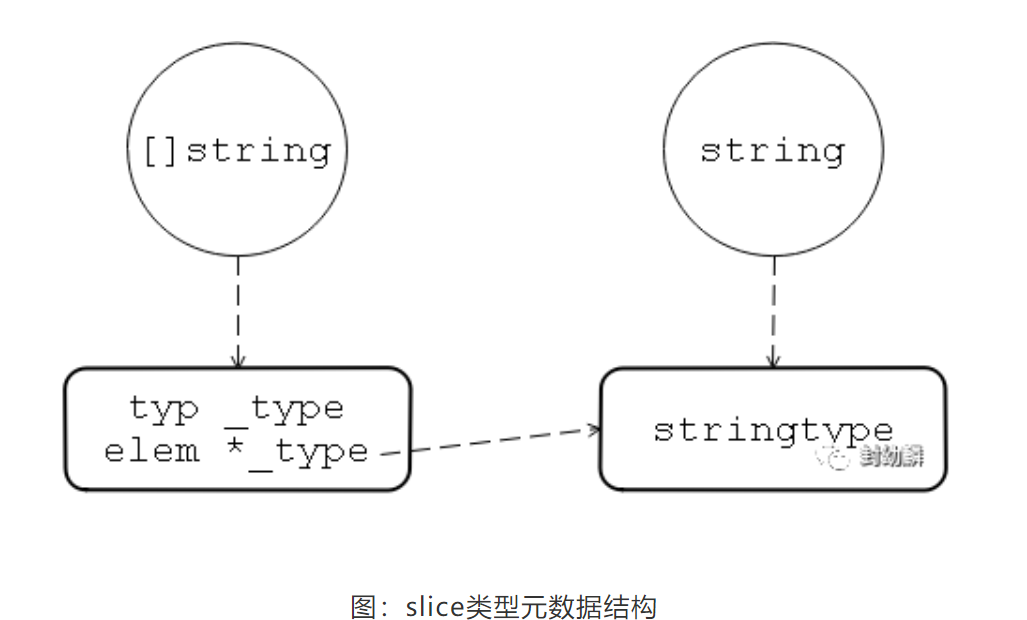
- slice
type slicetype struct {
    typ   _type
    elem  *_type
}
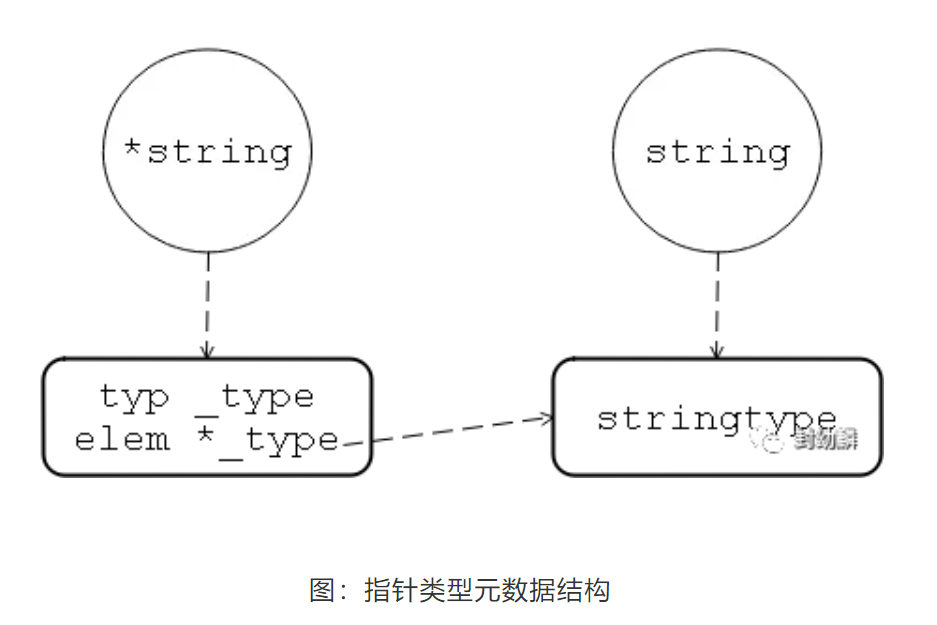
- Pointer
type ptrtype struct {
    typ   _type
    elem  *_type
}
2.2. Custom Types
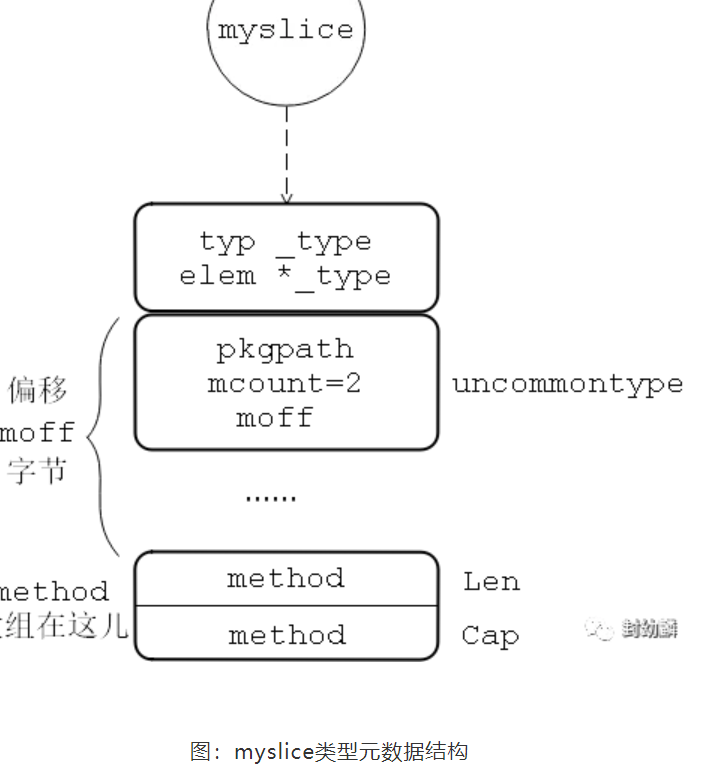
- They have an additional
uncommontype.
type uncommontype struct {
    pkgpath nameOff// records the package path where the type is located;
    mcount  uint16 // records how many methods are associated with this type;
    _       uint16 // unused
    moff    uint32 // records how many bytes the array of method metadata is offset relative to this uncommontype structure
}

// Method metadata pointed to by moff
type method struct {
    name nameOff
    mtyp typeOff
    ifn  textOff
    tfn  textOff
}
2.2.1. Example
type myslice []string
func (ms myslice) Len(){
    fmt.Println(len(ms))
}
func (ms myslice) Cap(){
    fmt.Println(cap(ms))
}
Discussion
Sign in with GitHub to comment. Discussions are stored as GitHub Issues.View on GitHub