
NOTE
package
1. What it is How Go organizes source code 2. Package initialization flow 3. Circular dependencies 4. Common packages 5. References
This is a historical learning note and may contain outdated or incomplete understanding.
1. What It Is
The way Go organizes source code.
2. Package Initialization Flow
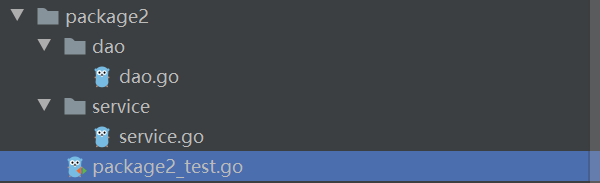
- package2_test.go
package package2

import (
	_ "test/package2/service"
	"testing"
)

func TestPackage1(t *testing.T) {

}- service.go
package service

import (
	"fmt"
	_ "test/package2/dao"
)

const ServiceName = "UserService"

var Type = "service"

func init() {
	fmt.Println(ServiceName, Type)
}- dao.go
package dao

import (
	"fmt"
)

const DaoName = "UserDao"

var Type = "dao"

func init() {
	fmt.Println(DaoName, Type)
}- Output
UserDao dao
UserService service
3. Circular Dependencies
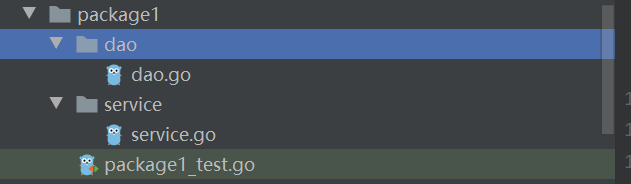
- package1_test.go
package package1

import (
	_ "test/package1/dao"
	_ "test/package1/service"

	"testing"
)

func TestPackage1(t *testing.T) {

}- dao.go
package dao

import (
	"fmt"
	"test/package1/service"
)

const DaoName = "dao"

type Dao struct {
}

func (d Dao) GetUser() {
	fmt.Println(service.ServiceName)
}- service.go
package service

import (
	"fmt"
	"test/package1/dao"
)

const ServiceName = "service"

type Service struct {
}

func (s Service) GetUser() {
	fmt.Println(dao.DaoName)
}- Output
import cycle not allowed
package test/package1 (test)
	imports test/package1/dao
	imports test/package1/service
	imports test/package1/dao
As you can see, test/package1/dao imports test/package1/service, while test/package1/service imports test/package1/dao, which creates a circular dependency.
4. Common Packages
4.1. context
4.2. http
4.3. Database
4.4. Serialization
- bashtian/jsonutils: Converter for JSON data to a Go struct or a Java class for GSON
- Parsing YAML Files in Golang - CSDN Blog
- go-yaml/yaml at v3
- Go JSON Tips You Need to Know | Li Wenzhou’s Blog
- Getting Started with Protobuf | Li Wenzhou’s Blog
4.4.1. JSON
tidwall/gjson: Get JSON values quickly - JSON parser for Go Deep Dive into High-Performance JSON Libraries in Go - luozhiyun’s Blog
4.5. I/O
4.6. log
- Using the Third-Party Log Library logrus | Li Wenzhou’s Blog
- Using the Zap Logging Library in Go Projects | Li Wenzhou’s Blog
4.7. redis
4.8. kafka
4.8.1. sarama
- Shopify/sarama: Sarama is a Go library for Apache Kafka 0.8, and up.
- Using Kafka with Go | Li Wenzhou’s Blog
- Examples
-
producer
const TopicName = "TopicName" func main() { config := sarama.NewConfig() config.Producer.RequiredAcks = sarama.WaitForAll // leader and followers must all acknowledge after data is sent config.Producer.Partitioner = sarama.NewRandomPartitioner // choose a new partition config.Producer.Return.Successes = true // successfully delivered messages are returned on the success channel // Connect to Kafka. producer, err := sarama.NewSyncProducer([]string{"127.0.0.1:9093"}, config) if err != nil { fmt.Println("producer closed, err:", err) return } defer producer.Close() i := 0 for { // Construct a message. msg := &sarama.ProducerMessage{} msg.Topic = TopicName msg.Value = sarama.StringEncoder(fmt.Sprintf("this is a test log %d", i)) // Send the message. pid, offset, err := producer.SendMessage(msg) if err != nil { fmt.Println("send msg failed, err:", err) return } fmt.Printf("pid:%v offset:%v\n", pid, offset) i++ time.Sleep(time.Second) } } -
consumer
const TopicName = "TopicName"

func main() {
	// When
	consumer, err := sarama.NewConsumer([]string{"localhost:9093"}, nil)
	if err != nil {
		fmt.Println(err)
		return
	}
	defer consumer.Close()

	partitionList, err := consumer.Partitions(TopicName) // get all partitions for the topic
	if err != nil {
		fmt.Println(err)
		return
	}
	fmt.Println(partitionList)

	for _, partition := range partitionList { // iterate over all partitions
		go func(partition int32) {
			consumePartition, err := consumer.ConsumePartition(TopicName, partition,
				sarama.OffsetNewest)
			if err != nil {
				fmt.Println(err)
			}
			defer consumePartition.Close()
			for {
				select {
				case message := <-consumePartition.Messages():
					fmt.Printf("topic: %v, partition: %v, offset: %v, key: %v, value: %v\n",
						message.Topic, message.Partition,
						message.Offset, message.Key,
						string(message.Value))
				case err := <-consumePartition.Errors():
					fmt.Println(err)
				}
			}
		}(partition)
	}

	select {}
}
-
4.8.2. confluent-kafka-go
Home · edenhill/librdkafka Wiki · GitHub Kafka Go Client | Confluent Documentation kafka - Go Documentation Server Consumer Configurations | Confluent Documentation
func replayKafkaEvent(ctx context.Context, totalInvites int64, rankID string) {
	c, err := kafka.NewConsumer(&kafka.ConfigMap{
		"bootstrap.servers":                  "<KAFKA_BROKER>:19092",
		"group.id":                           uuid.New().String(),
		"auto.offset.reset":                  "earliest",
		"topic.metadata.refresh.interval.ms": 5,
	})

	if err != nil {
		log.FatalContext(ctx, err)
	}
	topic := fmt.Sprintf("%s%v", "update_cache_", rankID)
	err = c.SubscribeTopics([]string{topic}, nil)
	if err != nil {
		log.FatalContext(ctx, err)
	}

	messages := make([]*kafka.Message, 0, 100000)
	for {
		msg, err := c.ReadMessage(-1)
		if err == nil {
			messages = append(messages, msg)
			chs <- msg
			//if len(messages) == 100000 {
			//	invites, _ := BatchUpdateCacheMsgConsumer(ctx, messages)
			//	if totalInvites <= invites {
			//		log.InfoContext(ctx, "rankID:%v init ok, invites:%v", rankID, invites)
			//		once.Do(func() {
			//			InitHotRankCacheFinished <- 1
			//		})
			//	}
			//	messages = make([]*kafka.Message, 0, 100000)
			//}
		} else {
			log.ErrorContextf(ctx, "Consumer error: %v (%v)\n", err, msg)
		}
	}
	//go func(c *kafka.Consumer) {
	//	partitions, err := c.Assignment()
	//	if err != nil {
	//		fmt.Fprintf(os.Stderr, "failed to set topic: %s\n", err)
	//		os.Exit(1)
	//	}
	//	partitions, err = c.OffsetsForTimes(partitions, ts.Second()*100000)
	//	if err != nil {
	//		fmt.Fprintf(os.Stderr, "failed to set topic: %s\n", err)
	//		os.Exit(1)
	//	}
	//	for _, partition := range partitions {
	//		c.Seek(partition, 0)
	//	}
	//	for {
	//		msg, err := c.ReadMessage(-1)
	//		if err == nil {
	//			messages = append(messages, msg)
	//			if len(messages) == 100000 {
	//				BatchUpdateCacheMsgConsumer(ctx, messages)
	//				messages = make([]*kafka.Message, 0, 100000)
	//			}
	//			ts = msg.Timestamp
	//			if totalInvites == 100000 {
	//				break
	//			}
	//		} else {
	//			log.Errorf("Consumer error: %v (%v)\n", err, msg)
	//		}
	//	}
	//	c.Close()
	//}(c)
}
4.9. cache
4.10. Formatting
- Installation
go get -u github.com/cuonglm/gocmt- Run from the project root directory
gocmt -d ./ -i4.11. Goroutine Pool
alitto/pond: 🔘 Minimalistic and High-performance goroutine worker pool written in Go
4.12. error
golang/xerrors xerrors package - golang.org/x/xerrors - Go Packages
4.13. errgroup
errgroup package - golang.org/x/sync/errgroup - Go Packages sync/errgroup at master · golang/sync Golang Goroutines Explained: errgroup - CodeAntenna ErrorGroup Usage and Extensions | Mark’s Blog
Discussion
Sign in with GitHub to comment. Discussions are stored as GitHub Issues.View on GitHub