
NOTE
4.1 Zipkin
Zipkin architecture, installation, and client usage.
This is a historical learning note and may contain outdated or incomplete understanding.
1. What Is Zipkin
- A distributed tracing system open-sourced by Twitter.
2. Zipkin Architecture
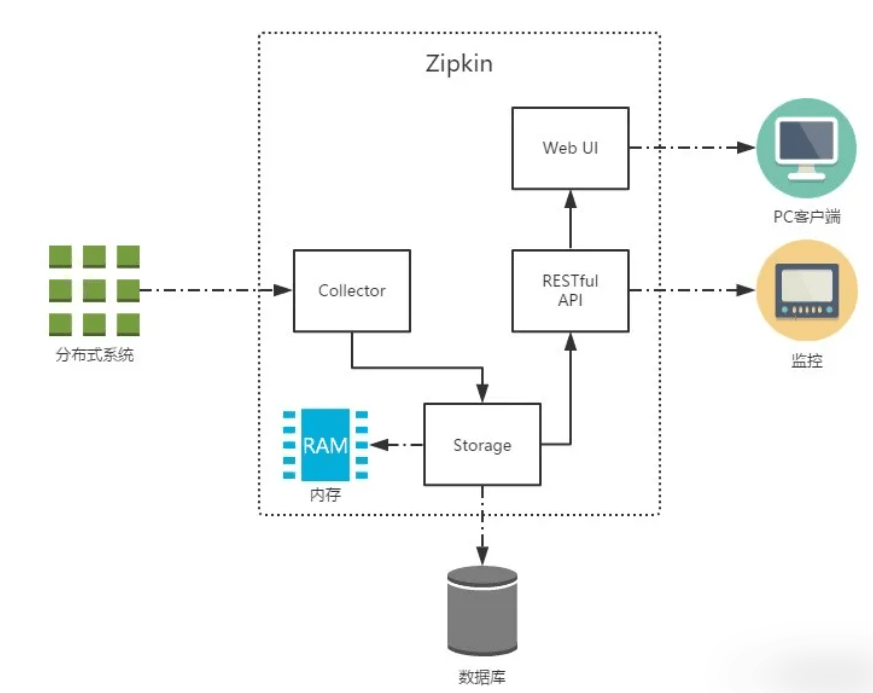
- Collector: the collector component processes tracing information sent from external systems and converts it into the Span format used internally by Zipkin, supporting subsequent storage, analysis, display, and other functions.
- Storage: the storage component processes tracing information received by the collector. By default the information is stored in memory; the storage strategy can be changed to use other storage components, with support for MySQL, Elasticsearch, and so on.
- Web UI: the UI component is an upper-layer application implemented on top of the API component. It provides web pages used to display call chains and system dependencies in Zipkin.
- RESTful API: the API component provides the web interface with APIs for querying data in storage.
3. Using Zipkin
3.1. Install zipkin-server
3.1.1. In-Memory Version
- Download the jar package.
curl -sSL https://zipkin.io/quickstart.sh | bash -s
java -jar zipkin.jar- Open a browser and visit http://127.0.0.1:9411/
Discussion
Sign in with GitHub to comment. Discussions are stored as GitHub Issues.View on GitHub