
NOTE
select, poll, epoll
1. select Several major disadvantages of select: Every time select is called, the fd set needs to be copied from user space to kernel space. This overhead becomes large when there are many fds. At the same time, each select call requires the kernel t
This is a historical learning note and may contain outdated or incomplete understanding.
1. select
- Several major disadvantages of select:
- Every time select is called, the fd set needs to be copied from user space to kernel space. This overhead becomes large when there are many fds.
- At the same time, each select call requires the kernel to traverse all passed-in fds. This overhead also becomes large when there are many fds.
- The number of file descriptors supported by select is too small; the default is 1024.
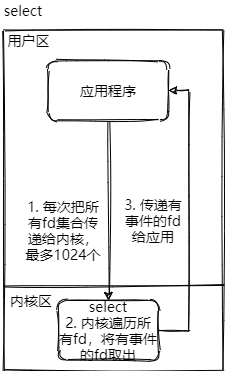
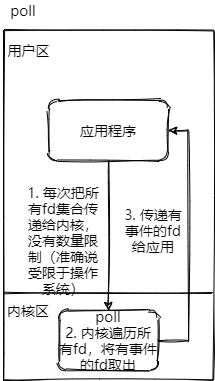
2. poll
- Solves the third problem of select.
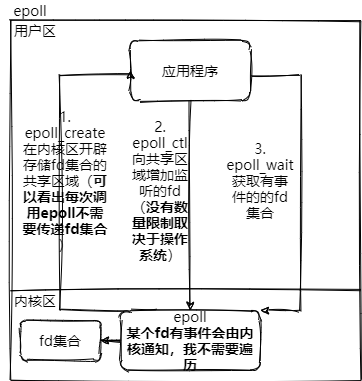
3. epoll
- Solves all three disadvantages of select.
3.1. LT
- Level triggered: as long as the read buffer is not empty, read events continue to be triggered; as long as the write buffer is not full, write events continue to be triggered.
- This is generally used because if an ET event is not handled properly after one trigger, there is no second chance.
3.2. ET
- Edge triggered: triggers once when the read buffer changes from empty to nonempty; triggers once when the write buffer changes from full to non-full.
- For example, a user sends a large file and fills the write buffer. Later, when the buffer becomes writable, a transition from full to non-full occurs once.
Discussion
Sign in with GitHub to comment. Discussions are stored as GitHub Issues.View on GitHub