
NOTE
Flyweight Pattern
Flyweight-pattern notes with UML and a Java example using a chess-object pool.
This is a historical learning note and may contain outdated or incomplete understanding.
1. Definition
Suitable when creating a large number of identical or similar objects, such as a thread pool.
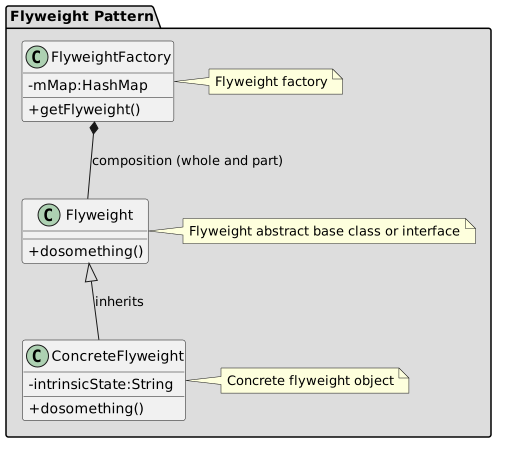
2. UML
3. Usage
3.1. Client
public class Client
{
    public static void main(String[] args)
    {
        Chess chess1 = ChessFactory.getChess("black");
        Chess chess2 = ChessFactory.getChess("black");

        // Same object
        System.out.println(chess1 == chess2);

        chess1.display(new Coordinate(10,20 ));

    }
}
3.2. Flyweight
public class Chess
{
    // Shared property
    protected String color;

    public Chess(String color)
    {
        this.color = color;
    }

    public String getColor()
    {
        return color;
    }

    public void setColor(String color)
    {
        this.color = color;
    }

    public void display(Coordinate coordinate)
    {

    }
}
public class ConcreateChess extends Chess
{
public ConcreateChess(String color)
{
super(color);
}
@Override
public void display(Coordinate coordinate)
{
System.out.println(this.color);
System.out.println(coordinate);
}
}public class Coordinate
{
// Unshared property
private int x,y;
public Coordinate(int x, int y)
{
this.x = x;
this.y = y;
}
@Override
public String toString()
{
return "Coordinate{" + "x=" + x + ", y=" + y + '}';
}
public int getX()
{
return x;
}
public void setX(int x)
{
this.x = x;
}
public int getY()
{
return y;
}
public void setY(int y)
{
this.y = y;
}
}3.3. Factory
public class ChessFactory
{
    // Object pool
    private static Map<String, Chess> chessMap = new HashMap<>();

    public static Chess getChess(String color)
    {
        // Return it from the pool if present; otherwise create it and put it into the pool
        chessMap.putIfAbsent(color, new ConcreateChess(color));
        return chessMap.get(color);
    }
}
Discussion
Sign in with GitHub to comment. Discussions are stored as GitHub Issues.View on GitHub