
NOTE
Bridge Pattern
Bridge-pattern notes for class hierarchies with multiple varying dimensions, with UML and a Java brand/device example.
This is a historical learning note and may contain outdated or incomplete understanding.
1. Definition
Suitable for class hierarchies that vary along multiple dimensions.
2. UML
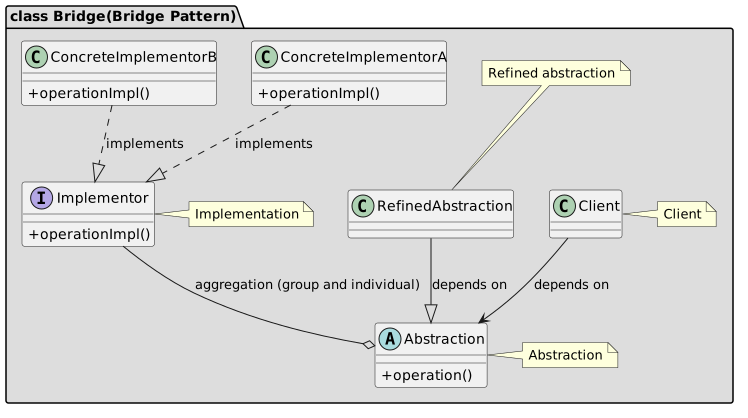
3. Java
3.1. Client
public class Client
{
    public static void main(String[] args)
    {
        // Create a Lenovo laptop
        Computer computer = new Laptop(new Lenovo());
        computer.sale();
    }
}
3.2. Dimension 1
public interface Brand
{
    void sale();
}
public class Dell implements Brand
{
@Override
public void sale()
{
System.out.println("Dell brand");
}
}public class Lenovo implements Brand
{
@Override
public void sale()
{
System.out.println("Lenovo brand");
}
}3.3. Dimension 2
public class Computer
{
    protected Brand brand;

    public Computer(Brand brand)
    {
        this.brand = brand;
    }

    public void sale()
    {
        this.brand.sale();
    }
}
class Desktop extends Computer
{
public Desktop(Brand brand)
{
super(brand);
}
@Override
public void sale()
{
super.sale();
System.out.println("desktop");
}
}public class Laptop extends Computer
{
public Laptop(Brand brand)
{
super(brand);
}
@Override
public void sale()
{
super.sale();
System.out.println("laptop");
}
}
Discussion
Sign in with GitHub to comment. Discussions are stored as GitHub Issues.View on GitHub