
NOTE
How to Design a Service Registry
What a service registry is, why it is needed, server-side and client-side design, service discovery and routing, registry components, and ZooKeeper versus Eureka.
This is a historical learning note and may contain outdated or incomplete understanding.
1. What Is a Service Registry
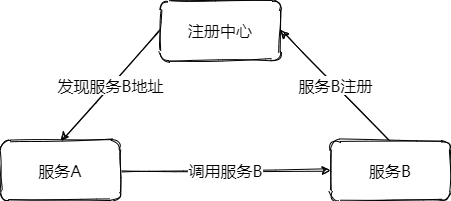
- It records the service name <-> IP address + Port mapping. In essence, it is no different from DNS.
2. Why a Service Registry Is Needed
Without a service registry, when A calls B it can only hard-code the IP address, which is inflexible.
3. How to Implement a Service Registry
3.1. Server Side
3.1.1. Service Registry Table
- Centralized, strongly consistent storage middleware, such as ZooKeeper (ZAB algorithm) and etcd (Raft algorithm).
- Decentralized, weakly consistent implementations, such as Eureka, Consul, and Nacos.
3.1.2. Infrastructure
- Use infrastructure (DNS) to implement service discovery, such as SkyDNS and CoreDNS.
3.2. Client Side
3.2.1. Service Provider
3.2.1.1. Service Registration
- After the service provider finishes starting, call the service-registry API and write the service name + IP address + Port + status.
3.2.1.2. Service Deregistration
- The service provider periodically reports heartbeats to the registry. If no heartbeat is received for a period of time, remove it from the list.
- When the service provider shuts down, it actively calls the registry API to go offline.
3.2.1.3. Service Load Balancing
3.2.2. Service Consumer
3.2.2.1. Service Discovery
- poll: the service consumer periodically requests the registry.
- push: the registry pushes to the service consumer, using a long-lived connection to maintain heartbeats.
- long polling: the service consumer requests the registry, and the registry holds the request for a period of time and returns when there is data.
3.2.2.2. Service Routing
- The service consumer gets a list of nodes from the registry using the service provider’s name. If it needs to filter and select these nodes, that is service routing.
There are several routing rules:
3.2.2.2.1. IP
- Access a specified IP, which is convenient for testing and locating problems.
3.2.2.2.2. Proximity Routing
- Proximity routing: prefer calls within the same Zone to reduce network latency. The service provider needs to write the data-center identifier into the registry when registering, so the service consumer can decide how to route based on its own data-center information.
3.2.2.2.3. Service Grouping
- It may be necessary to deploy multiple groups of services for different consumers.
3.2.2.2.4. Service Version
- Versioning to support canary rollout.
3.2.2.2.5. Other Optional Rules
- Fault injection, circuit breaking, traffic mirroring, etc.
4. Service-Registry Components
4.1. Eureka
4.2. Consul
4.3. ETCD
4.4. ZooKeeper
4.5. Kubernetes DNS
5. Selection
5.1. ZooKeeper vs. Eureka
| ZooKeeper | Eureka | |
|---|---|---|
| Cluster mode | leader, follower (only the leader writes) | p2p (every node can write) |
| Consistency guarantee | CP | AP |
| Timeliness | A few seconds by default | 1 minute by default |
6. References
- Service Discovery - Service Registry Design
- Building a Service Registry in Go | rauljordan
- GitHub - jaypipes/gsr: Golang Service Registry library
- Understand Service Routing and Load Balancing, and Get Microservices Going - 51CTO.COM
- Service Routing | dapeng-soa
- A Deep Look at Eureka Architecture Principles and Implementation - Zhihu
Discussion
Sign in with GitHub to comment. Discussions are stored as GitHub Issues.View on GitHub