
NOTE
7.10 3. Garbage Collectors
Generational collection and historical Serial, Parallel, CMS, and G1 collectors, including CMS/G1 details and comparison.
This is a historical learning note and may contain outdated or incomplete understanding.
1. Garbage-Collection Algorithm Actually Used by the JVM: Generational Collection
Memory is divided into the young generation and old generation according to object lifetime.
- The young generation is characterized by only a small number of surviving objects after each collection, so an improved copying algorithm is used. The improved copying algorithm divides memory into Eden and Survivor areas (8:1:1), so only 10% of the space is wasted.
- The old generation is characterized by many surviving objects, so mark-sweep and mark-compact algorithms are used.
2. Garbage-Collector Categories
2.1. Four Categories and Seven Garbage Collectors
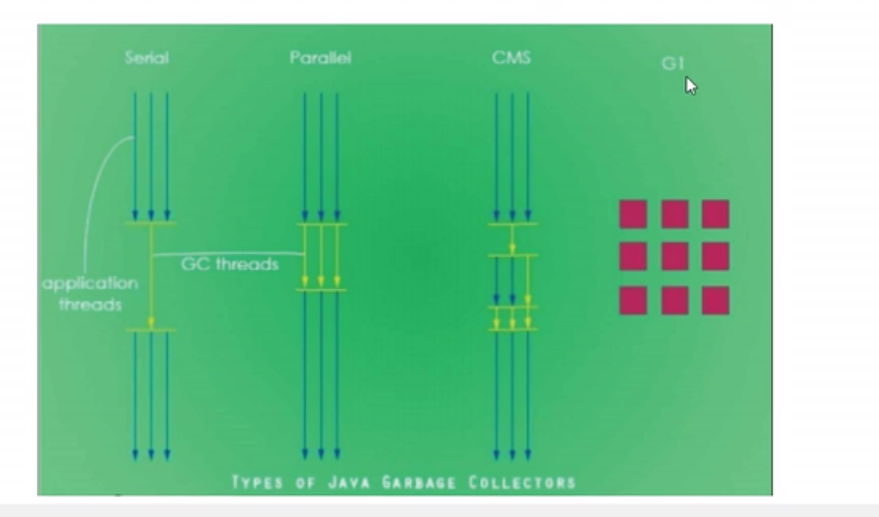
- Serial: garbage collection is performed by a single thread while all user threads are paused.
- Young generation: Serial collector.
- Old generation: Serial Old collector.
- Parallel: garbage collection is performed by multiple threads while all user threads are paused.
- Young generation: ParNew collector and Parallel Scavenge collector.
- Old generation: Parallel Old collector.
- CMS: garbage collection is performed by multiple threads and user threads do not need to be paused for the entire collection.
- G1:
2.1.1. How to Enable Them
4. Selecting a Specific Garbage Collector with JVM Parameters
2.2. CMS in Detail
- Initial mark: single-threaded and STW, but it only marks objects directly reachable from GC Roots. Because the number of directly associated objects is relatively small, this stage is very fast.
- Concurrent mark: multi-threaded without STW for the whole phase. It concurrently traces and marks the objects identified by the initial-mark phase while other threads can continue working. This stage takes longer but does not stop all application work for the whole phase.
- Remark: STW. Because new garbage or reference changes may occur during concurrent marking, a remark is required. This phase runs without user threads and generally takes longer than initial marking.
- Concurrent sweep: multi-threaded without STW for the whole phase. It concurrently clears the garbage previously marked while other user threads can continue working.
2.2.1. Log Analysis
2.3. G1 in Detail
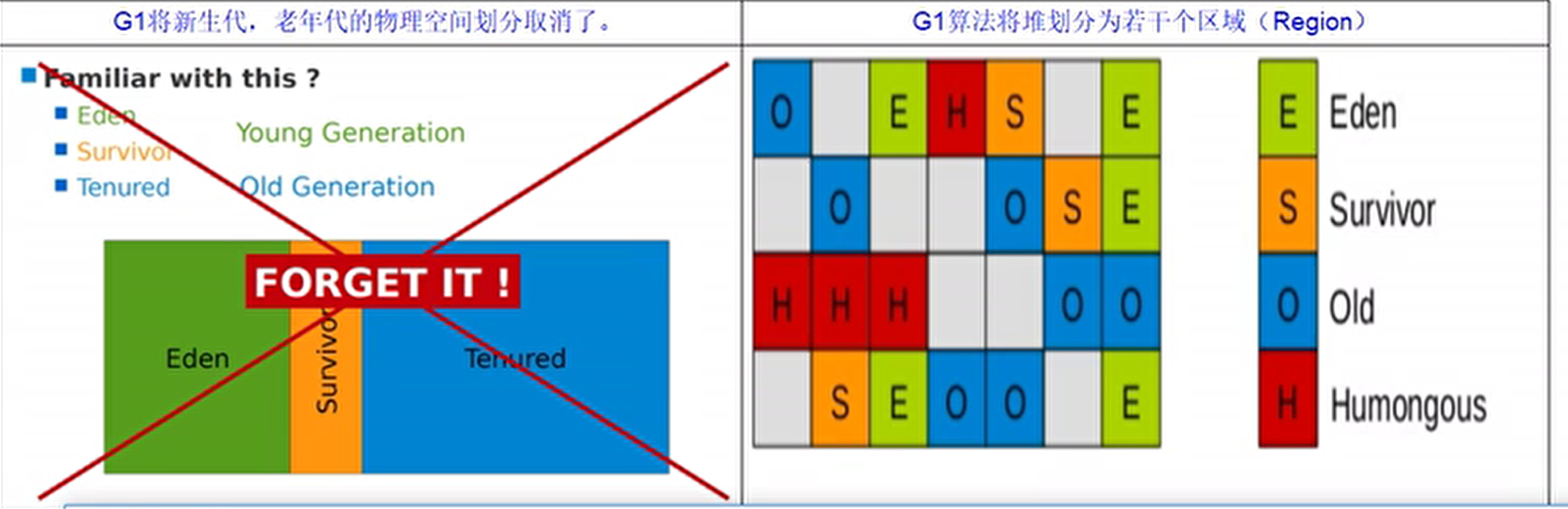
- Memory division: macroscopically it is no longer laid out simply as contiguous young- and old-generation areas. It is divided into N regions, and each region has generational attributes.
-
It uses mark-compact overall to avoid memory fragmentation and copying locally.
-
G1 can specify a desired pause-time target.
-
The collection process includes:
- Initial mark: STW, marks objects directly reachable from GC Roots.
- Concurrent marking: performs concurrent marking while user threads can still run.
- Remark: STW; because reference changes may occur during concurrent marking, mark again.
- Live Data Counting and Evacuation: evaluates reclaimable regions and selects what to reclaim based on the pause-time goal.
2.4. CMS vs. G1
| CMS | G1 | |
|---|---|---|
| Scope | Old-generation collector; can be used together with young-generation collectors such as ParNew | Covers both young and old generations and does not need another collector for those generations |
| Goal | Minimize pause time | Make garbage-collection pause time more predictable |
| Memory fragmentation | Uses mark-sweep and can create memory fragmentation | Uses region compaction/evacuation to reduce fragmentation |
| Collection process | See 2.2 CMS in Detail | See 2.3 G1 in Detail |
Discussion
Sign in with GitHub to comment. Discussions are stored as GitHub Issues.View on GitHub